
Did you know?
Gardening is a scientifically supported method for reducing stress, with multiple studies confirming its benefits. Spending just 30 minutes a few times a week in gardening activities can significantly lower cortisol levels. This is your body’s primary stress hormone, while improving mood and mental clarity.
Research shows that gardening reduces stress more effectively than reading, likely due to the combination of physical activity, exposure to nature, and mindfulness.
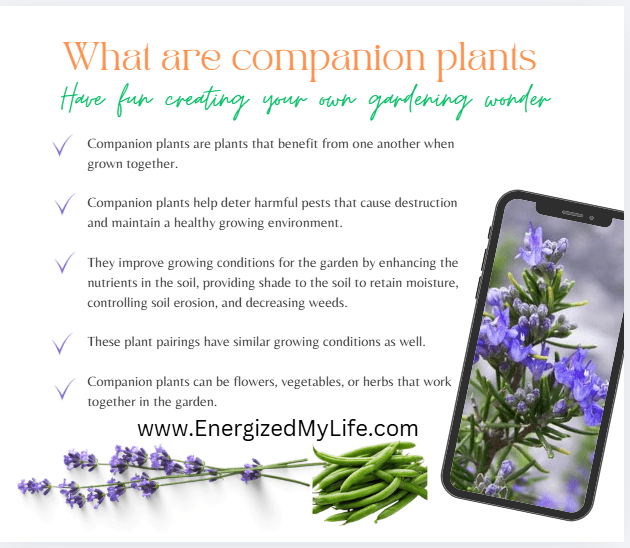
Companion plants are plants that benefit from one another when grown together. Companion plants help deter harmful pests that cause destruction and maintain a healthy growing environment. They improve growing conditions for the garden by enhancing the nutrients in the soil, providing shade to the soil to retain moisture, controlling soil erosion, and decreasing weeds. These plant pairings have similar growing conditions as well. Companion plants can be flowers, vegetables, or herbs that work together in the garden.
Rosemary and peppers are great together for reducing damaging insect populations. They both need at least 6 – 8 hours of full sun. Rosemary helps retain moisture that the pepper plant requires. The best part is the combination of colors from the peppers (Capsicum annuum) with the bright or dark green on the surface to the grayish underneath rosemary.
Rosemary and lavender pairing are perfect for that Mediterranean walkway. They have similar needs for well-draining soil to prevent root diseases and full sun exposure. Imagine the distinctive floral, slightly sweet delicate fragrance of lavender as you make your way through the garden. Rosemary adds its own calming and fresh subtle piney scent. Together they create a balanced, complex scent that is both invigorating and calming. This combination is commonly found in blends for enhancing focus, reducing stress, and promoting relaxation.
How about rosemary and beans? The aromatic compounds in rosemary are known to deter Mexican bean beetles in both green beans and lima beans. Rosemary’s volatile organic compounds (VOCs), including 1,8-cineole, camphor, and limonene, creating a sensory barrier that disrupts the beetles’ ability to detect and feed on susceptible crops like beans. When planted near beans, rosemary not only confuses the beetles but also reduces their feeding and oviposition (egg-laying) behavior, protecting the crop.
While you’re at it, you might as well add cabbage and other cruciferous vegetables to your rosemary garden. Rosemary can also repel cabbage looper moths. This insect’s name refers to the small green caterpillars that chew holes in the foliage of cabbage and related crops such as broccoli and brussels sprouts. Cabbages thrive in sunny spaces as well as rosemary plants.
Start gardening and enjoy your outdoor space. Even novice gardeners saw measurable mental health improvements within their first season. Whether indoors or outdoors, gardening offers a natural, accessible, and affordable way to manage stress and enhance overall psychological wellbeing.

 Journey to Wellness