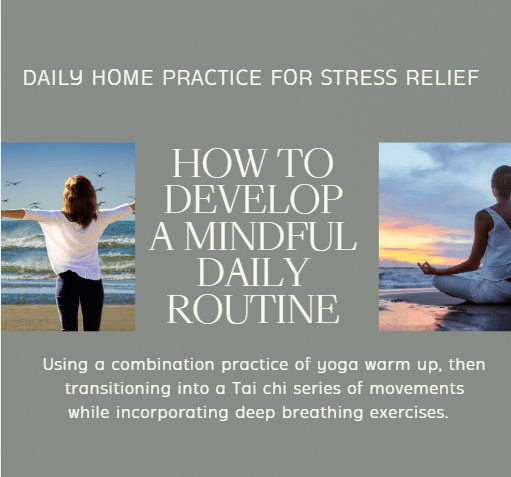
There are many benefits for exercising, yoga, tai chi, and mindfulness at home. Choose one or more to get started and practice them daily. It only takes 15 minutes of your time. Research has shown that Mindfulness-Based Stress Reduction (MBSR) is a well-established approach that combines meditation and yoga to alleviate stress, anxiety, and chronic pain.
Tai-chi and mindfulness share a propound connection, as both practices emphasize being present in the moment. Mindfulness, as defined by Jon Kabat-Zinn, is the awareness of one’s thoughts, feelings, and bodily sensations without judgment or distraction. In Tai Chi, this mindfulness is cultivated through deliberate movements, deep breathing, and focus on the present moment.
Take a moment to go through some of the benefits and tips below. Both practices emphasize the connection between the mind and body, and mindfulness is a key component of both. Try mindfulness with Yoga or mindfulness with Tai-chi. Practice for a minimum of 7 days to get the best results. Try both options to get obtain the best options and you might be surprised that you enjoy both. We have suggestions at the end of this article that combines both practices for a more holistic approach.
Key Components:
- Mindfulness Meditation: Regular mindfulness meditation practice helps train the mind to focus on the present moment, reducing rumination and worry about the past or future.
- Yoga: Gentle yoga postures and breathing techniques help release physical tension and promote relaxation. Yoga, particularly Hatha and Vinyasa styles, also emphasize being present in the body and breath. By synchronizing breath with movement and attention, individuals can quiet the mind, reduce stress, and increase feelings of calm and relaxation.
- Tai-Chi: Present-Moment Awareness, were both Tai Chi and mindfulness encourage individuals to focus on the current moment, letting go of distractions and mental chatter. Mindfulness and Tai Chi promote a non-judgmental approach, allowing practitioners to observe their experiences without criticism or attachment.
- Daily Home Practice: Participants are encouraged to practice mindfulness exercises, yoga, or Tai-chi at home, fostering a sense of self-care and responsibility. Yoga’s physical postures (asanas) and mindfulness’s attention to bodily sensations can increase self-awareness, helping individuals better understand their physical and emotional needs. The combination of yoga and mindfulness can lead to improved overall well-being, including enhanced physical flexibility and strength, reduced chronic pain, and increased emotional resilience. The combination between mindfulness and Tai-chi enhances concentration and reduces mind-wandering, leading to greater mental clarity and calmness leading to improved focus.
Benefits:
- Improved Mood: Mindfulness training has been shown to reduce symptoms of depression and anxiety, promoting a more positive outlook.
- Reduced Stress Responses: Regular mindfulness practice can lead to less intense stress responses, reducing the negative impact of stress on overall well-being.
- Increased Resilience: Mindfulness-based stress reduction helps develop coping skills and emotional regulation, enabling individuals to better navigate stressful situations.
Combining Both Practices
You can practice both yoga and tai chi, and even combine elements of each to create a unique practice that suits your needs and preferences.
For example: Please don’t be intimidated, reach out to our health coach for suggestions on which videos to watch or which kinds to use as beginners.
- Start with a yoga warm-up or sequence, then transition into a tai chi form or series of movements.
- Incorporate mindfulness meditation or deep breathing exercises into your yoga or tai chi practice.
- Experiment with different styles of yoga e.g., Hatha, Vinyasa, Restorative, and tai chi e.g., Yang, Wu (Hao), Chen, and Sun to find what resonates with you.
Our team have practiced both the traditional Yang style and Qigong forms. We are not experts but have taken courses in person and online. In addition, we have taken regular Yoga classes in the past as individuals and as a group. Read our short description on the key differences between Tai chi and Qigong.
- Form and Structure: Tai Chi typically involves a continuous, formal sequence of movements, requiring space to move around. Qigong, on the other hand, consists of individual exercises that can be done in a limited space.
- Discipline and Rigidity: Tai Chi requires more discipline and rigidity, with a focus on proper form and technique. Qigong is less rigid, allowing for more flexibility and adaptation to individual needs.
- Complexity: Tai Chi forms can be complex and take months to learn, with a lifetime to master. Qigong exercises are often simpler and more accessible, with fewer movements to learn.
- Purpose: While both practices aim to promote health and wellness, Tai Chi is often focused on martial arts and internal alchemy, whereas Qigong is more focused on cultivating and balancing life energy (Qi).
- Adaptability: Qigong is more adaptable to individual needs and abilities, making it suitable for people with disabilities or injuries. Tai Chi forms may be more challenging for those with certain limitations.
Tai Chi and Qigong differ in their form, structure, discipline, complexity, and purpose. Tai Chi is a more formal, structured practice with a focus on martial arts and internal alchemy, while Qigong is a more flexible, adaptable practice focused on cultivating and balancing life energy.
Both practices demonstrated the efficacy of practicing Tai Chi and Qigong in promoting various health benefits. Your cardiovascular health improves with regards to lowered blood pressure, and the potential to reduce symptoms of chronic heart failure. Your musculoskeletal health will benefit with improved balance therefore reducing risk for falls and receiving strengthen muscles. Your mental health will receive benefits from improved mood and less symptoms of anxiety.
“Tai Chi is also called Tai Ji and is an ancient form of Chinese Martial Arts mostly practiced today for health, wellness, and longevity!” Jake Mace, Kung Fu and Tai Chi instructor
Enjoy

 Journey to Wellness